Golriz
/
Case Study
My Role
Prototyping
UX strategy
Platform architecture
Cross-functional alignment
Impact
Redesign supported a new pricing model that retained multiple at-risk clients and won business with smaller enterprise brands
20% more new users completed early engagement actions linked to retention
The Challenge
Business Context: Morning Consult surveys hundreds of thousands of people daily across over 40 markets on topics ranging from brand perception to purchasing behavior. Their B2B SaaS platform provides enterprise insights and marketing teams access to this consumer data to help inform strategic business decisions.
Morning Consult had historically sold each product in it’s SaaS platform as a standalone subscription. After launching a third core product, this standalone subscription model started creating friction. Prospects struggled to understand the offering, existing clients had to justify multiple add-on purchases, and sales teams had difficulty explaining it all. Leadership saw an opportunity to restructure the pricing and packaging to bring in smaller brands who couldn't afford the current pricing model and retain budget-conscious clients at risk of churning. But this wasn't just a commercial decision. The platform's architecture and permissioning were built around the old subscription model, we couldn't simply flip a switch. Our product team was tasked with completely transforming the site structure and navigation to support the new approach, delivering it on time for a go-to-market deadline while multiple teams worked in parallel.
The Solution
Before design work even kicked off, I identified a problem with the proposed SaaS subscription model that would heavily impact the user experience, design solutions, and engineering build time and maintenance. In the original model, clients had access to all brands and data we tracked on them in every market they purchased. But we were moving to a new model that included Audience as a core feature while making individual brands an add-on lever for upselling. The proposed base subscription was going to include only one brand, but much of the platform's value came from comparing multiple brands to gain context. This would have forced us to build and maintain two separate versions of the platform with different capabilities, which as the sole designer would have been unsustainable and made it significantly harder to demonstrate value to users. I documented the full impact and advocated to adjust the offering to two brands in the base model. After understanding the potential downside, the final pricing model was updated to include two brands.
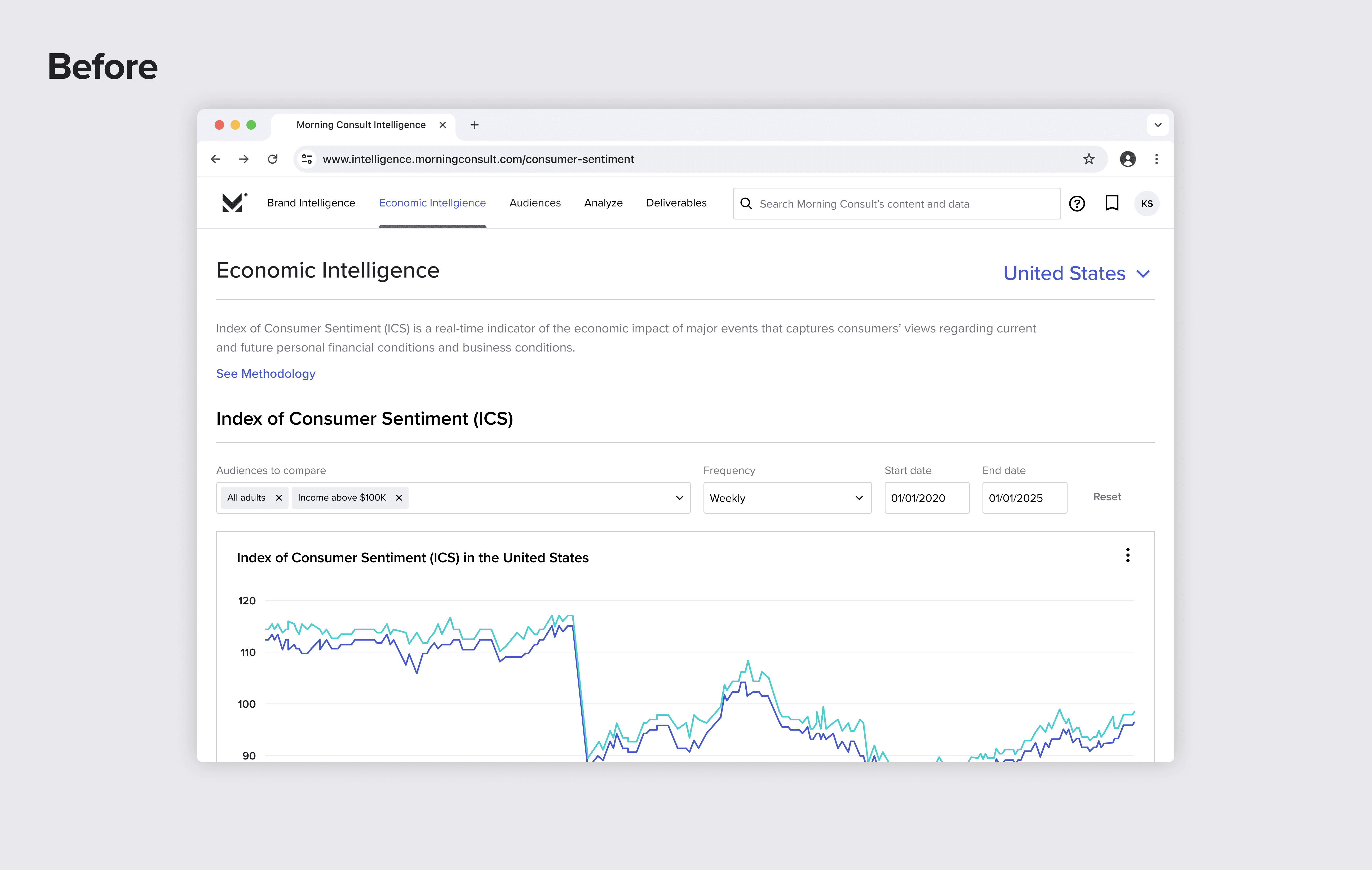
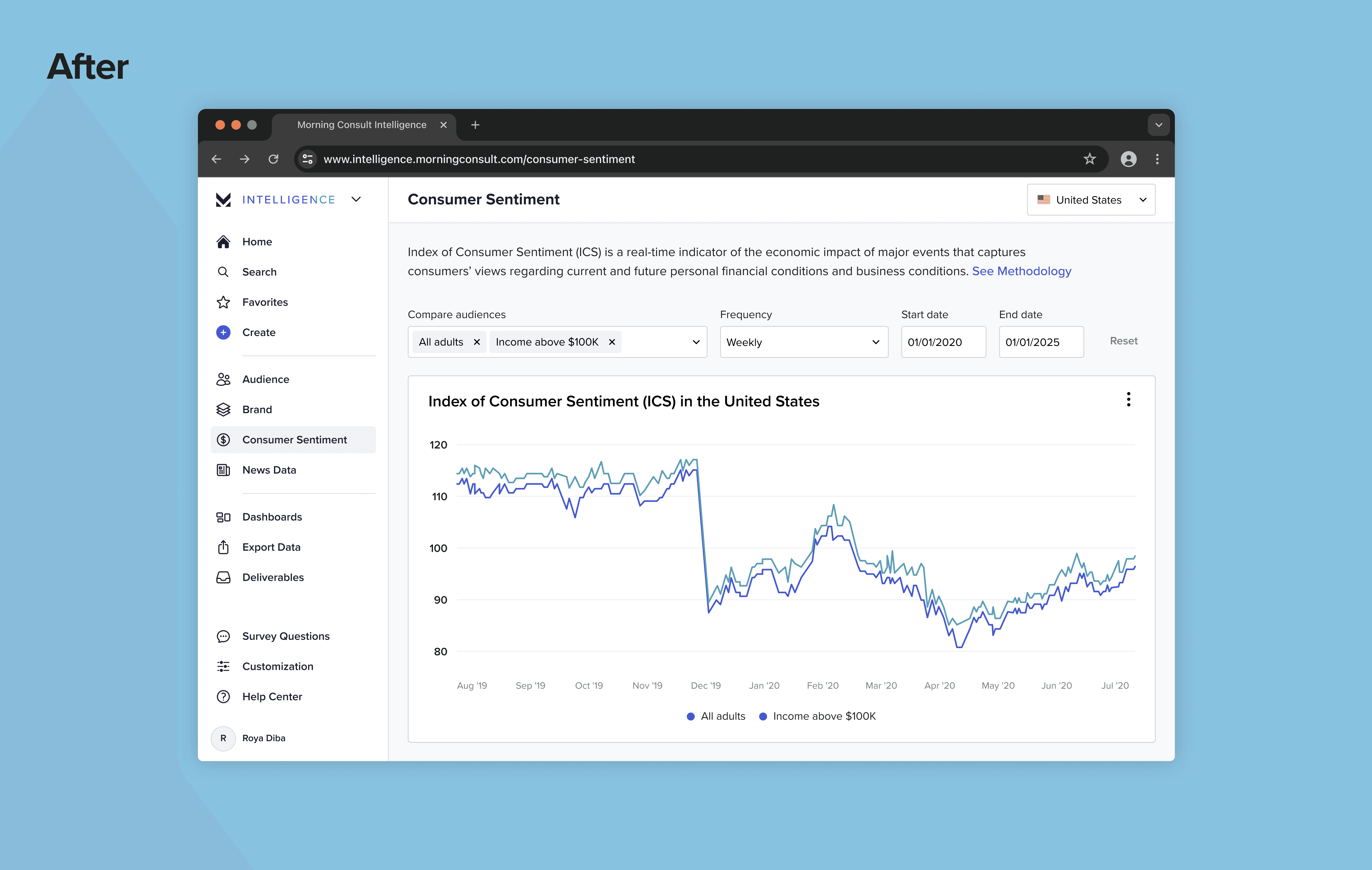
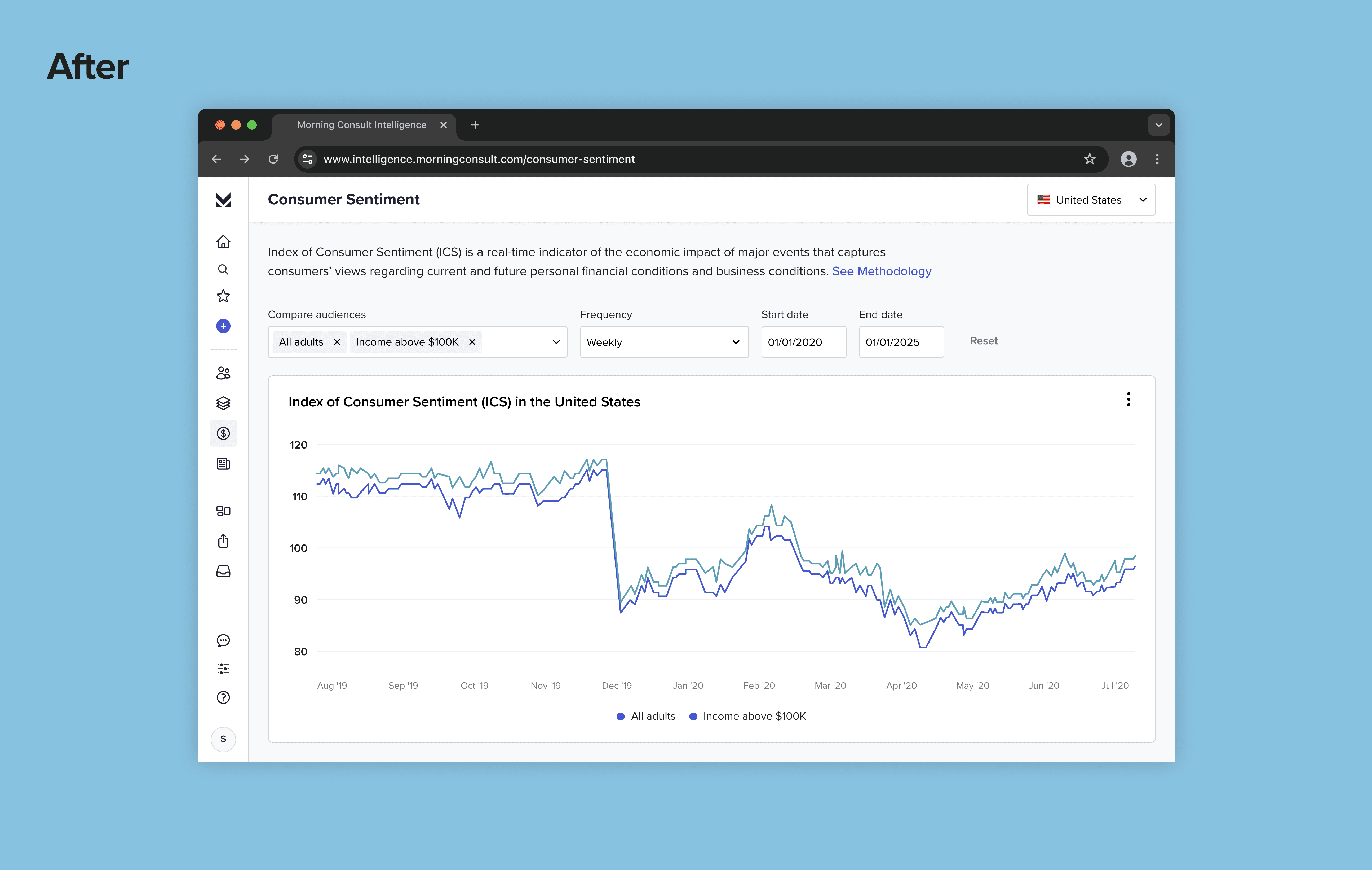
With that resolved, I audited the current architecture to understand what needed to change to align with the new SaaS subscription model. But the real foundation came from drawing on months of client conversations and platform work I'd already done. I had a backlog of notes and ideas that weren't in scope before, and this project finally gave me the opportunity to address them. The UX changes would span multiple repos, so I had to identify the biggest opportunities that would help unify the platform and address design drift without adding too much custom work so we could launch on time. The new design updated from horizontal to vertical navigation that would allow us to scale as we experimented and added new features, making them more visible. I grouped related workflows together that were previously disjointed and established consistent UI across the platform.
So What
The platform redesign enabled the company to launch new pricing that brought in new logos from smaller companies who previously couldn't afford the platform and retained at-risk clients during renewal time six months later by offering them the base tier, creating a significant revenue unlock for the business. On the UX side, the improved discoverability had immediate impact. A previously buried feature called News Data saw a 30% increase in usage, and 20% more new users completed early engagement actions that were linked to long-term retention. Beyond these immediate wins, the work created a foundation that made it easier to surface future beta features as we continued to experiment and add capabilities to the platform.