Golriz
/
Case Study
My Role
User Interviews
Prototyping, UX/UI
Information Architecture
Updating Taxonomy
Impact
MAUs increased by 45%
Data exports per session grew 30%
Generated over $1M in the first two months post-launch, faster than typical sales cycles
The Challenge
Business Context: Morning Consult surveys hundreds of thousands of people daily across over 40 markets on topics ranging from brand perception to purchasing behavior. Their B2B SaaS platform provides enterprise insights and marketing teams access to this consumer data to help inform strategic business decisions.
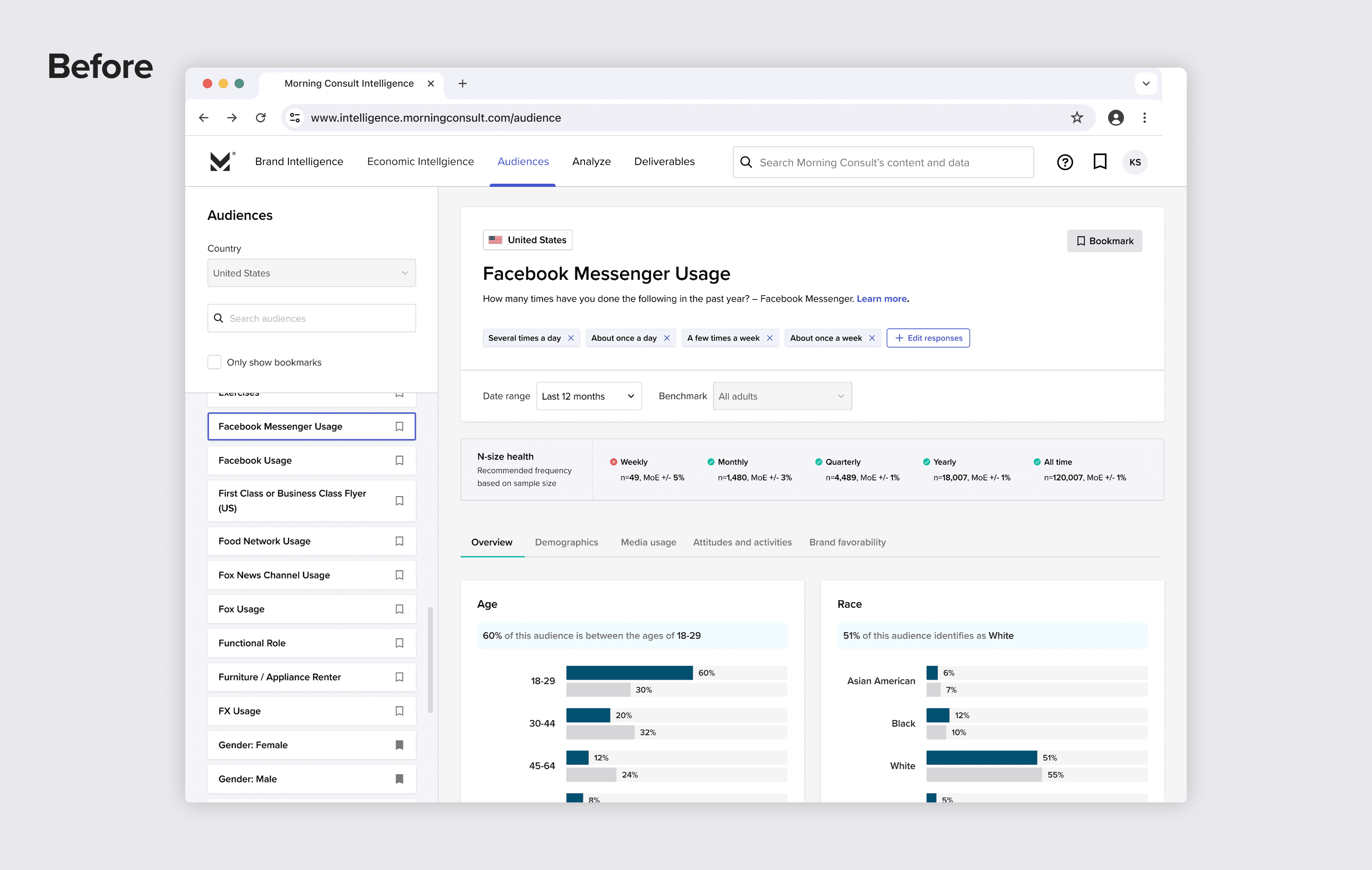
When Morning Consult launched Audience as a free beta to help users understand who their target audiences were and how to reach them, it quickly gained traction. Sales teams reported it was opening doors with new prospects, and existing clients were excited to have audience insights alongside the brand metrics they were already tracking. Leadership saw the demand and decided to invest in turning it into a paid product. But the beta required heavy involvement from CSMs. Users couldn't easily find the data they needed or export it efficiently. We had a general understanding of the issues from internal channels but needed to understand the nuance to identify which problems were worth solving to make this a scalable, self-service product that could generate revenue.
The Solution
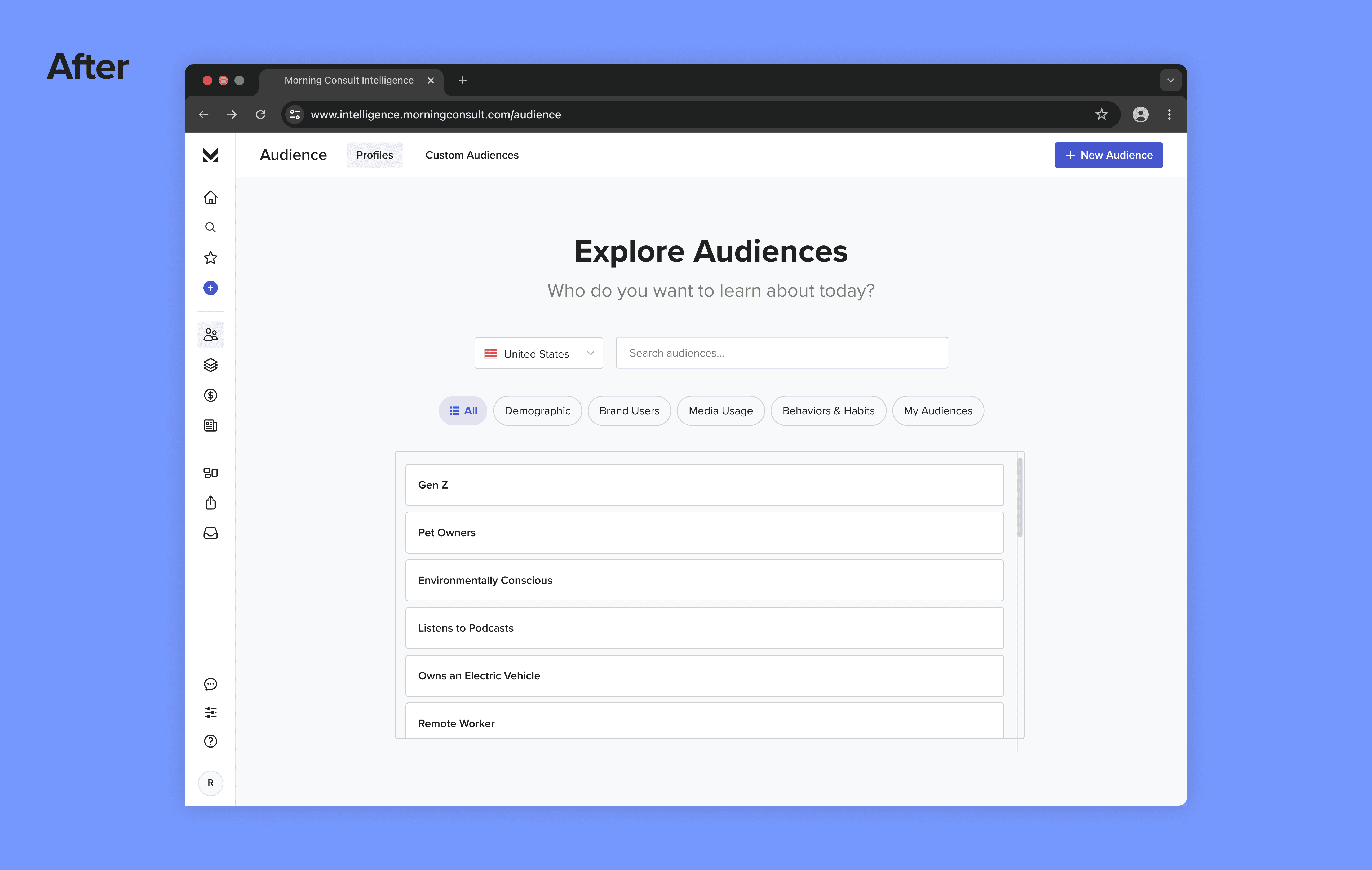
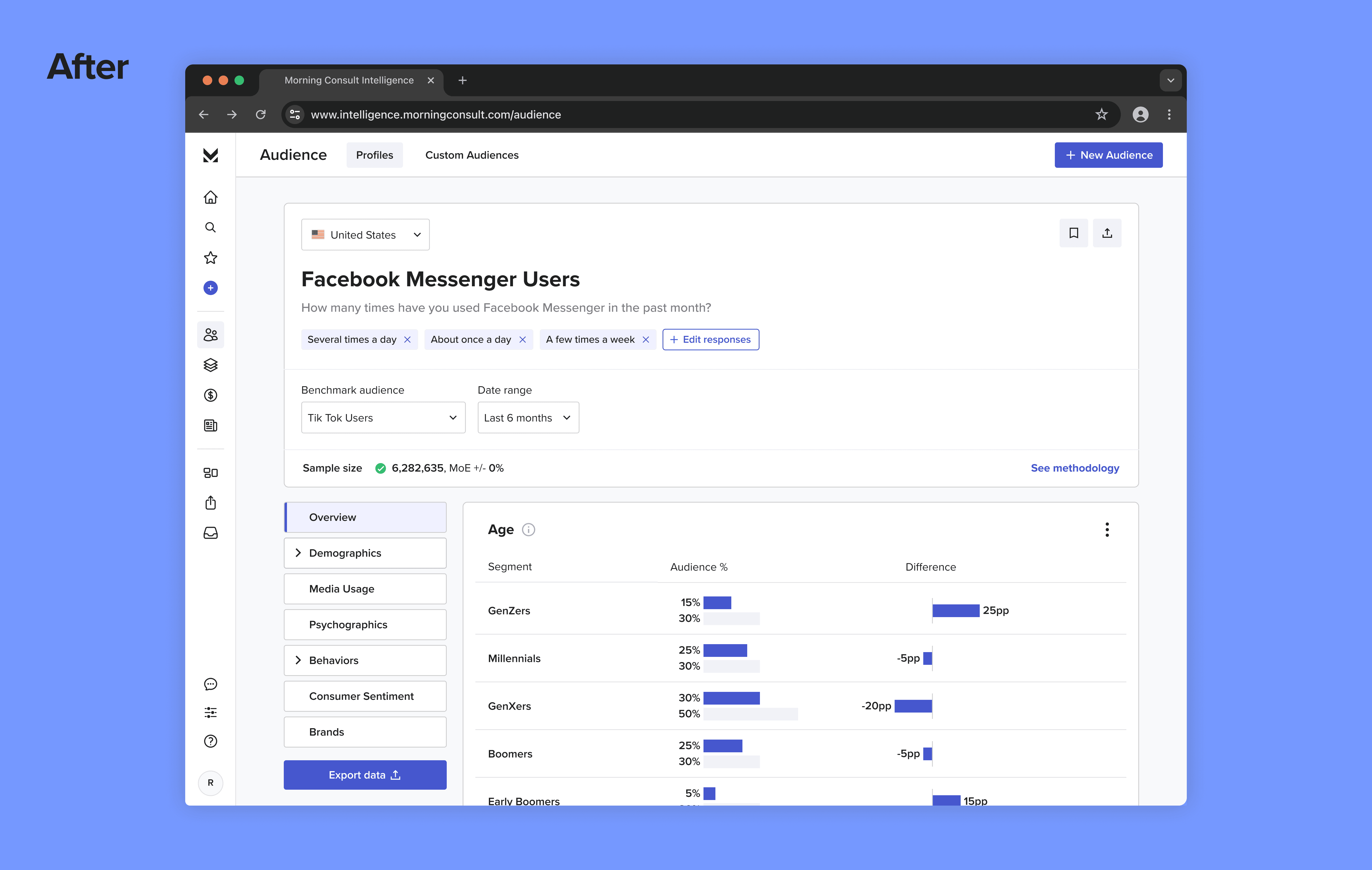
I partnered with the Product Manager to lead problem definition research with clients and internal stakeholders to understand where the product was falling short. Through interviews and affinity mapping, I identified patterns around usability gaps and missing data that were driving CSM dependency. Research revealed users needed hundreds of additional data points to understand the audiences they were targeting. The challenge was making that volume of data easy to navigate and discover. Our backend didn't support fuzzy search, and building it would have significantly delayed launch, so users would rely entirely on a newly designed taxonomy. I worked closely with CSMs who understood mental models across different industries to develop a structure that matched how users actually thought about audience data. After validating through usability testing and refining labels based on feedback, I designed several UX improvements. Audience selection was separated from analysis to keep the critical decision at the top while maximizing screen space for data. Navigation became sticky so users always knew where they were. Users could now sort by the biggest differences between audiences to surface key insights rather than interpreting raw percentages. And bulk data export let users pull everything they needed in one action instead of chart by chart.
So What
The UX improvements led to strong engagement and adoption. Return usage increased by 55% and data exports grew by 40%. Manual data requests to CSMs dropped significantly, which meant the self-service model was working. The product generated over $1M in sales in the first two months post-launch, faster than typical sales cycles. The success led the company to restructure the entire SaaS subscription model to include Audience as a core offering. This opened up new opportunities to bring in smaller brands at a lower subscription tier and kept budget-conscious existing clients from churning, fundamentally changing how the company packaged and sold its products.